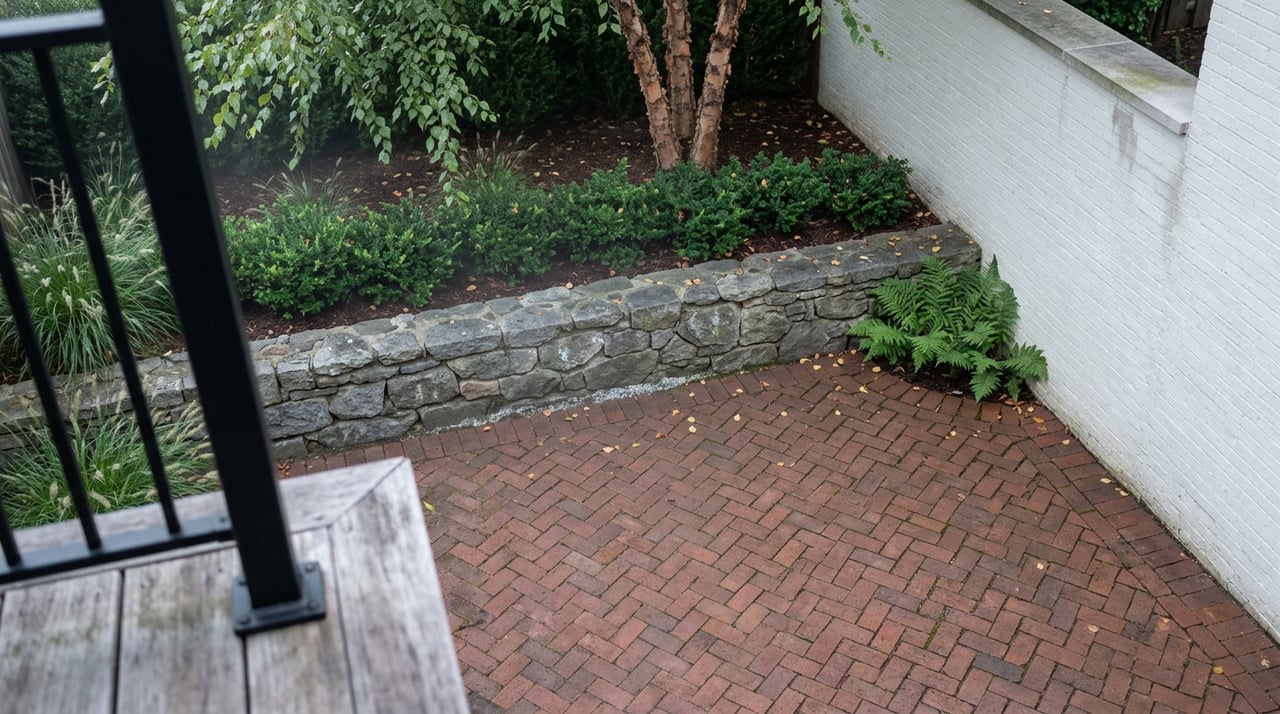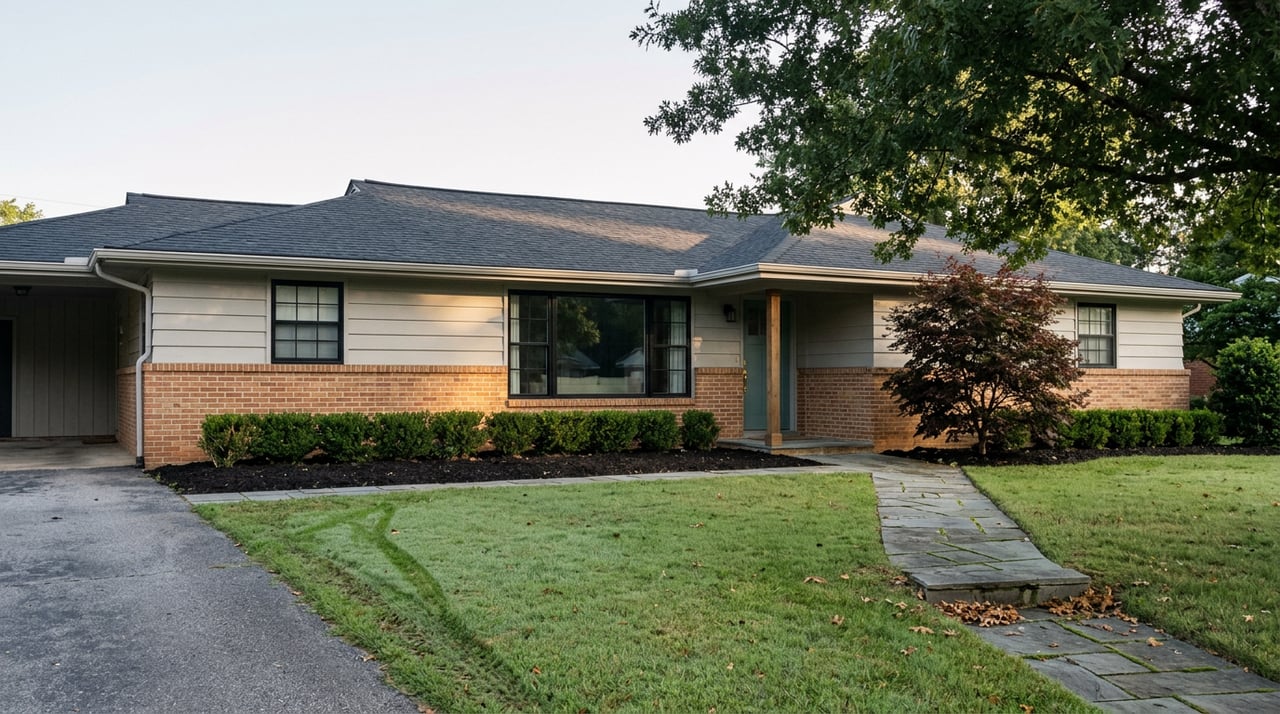
Picture the inspection walkthrough on a 1948 Cape Cod in Waverly Hills. The inspector is in the crawl space with a flashlight, checking the age of the furnace, because a house built when Truman was in office was almost certainly heated with oil. Upstairs, the buyer is holding a copy of the seller's disclosure statement, expecting it to tell her something about the house. It doesn't. In Virginia, that form isn't a list of problems. It's a legal notice that no one is required to tell you about them.
That's the part first-time buyers in Arlington rarely see coming, and it's the reason the form itself deserves more scrutiny than most people give it before they write an offer.
The Form Says "No Representations." That's the Point.
Virginia is one of a small group of states that still runs on caveat emptor, the old common-law rule that puts the burden of discovering a property's problems on the buyer, not the seller. The Virginia Residential Property Disclosure Act, codified at Virginia Code § 55.1-703, is built around that rule. The required statement doesn't ask a seller to check boxes about roof age or past water damage. It says, in effect, that the owner makes no representations about the condition of the property and advises the purchaser to do their own due diligence, including a home inspection.
That doesn't mean sellers can say whatever they want. If a buyer asks a direct question in writing, such as whether the basement has ever flooded, the seller has to answer truthfully. Actively hiding a defect, like painting over a water stain, can still expose a seller to liability. But there's no obligation to volunteer anything the buyer didn't specifically ask about. The form exists to notify the buyer that the burden is theirs, not to lift it.
The Form Just Got Longer. That's Not Good News for Buyers.
Here's the part worth sitting with. Virginia's disclosure statute has been amended almost every legislative session for the past two decades, and each amendment adds another item to the list of things the seller is now formally allowed to say nothing about. A stormwater management facility clause was added by statute in 2020, covering privately owned drainage infrastructure a buyer would otherwise never think to ask about. A separate clause covers repetitive flood loss history. The version of the required disclosure form now in effect, effective July 1, 2026, adds language specific to radon: the owner makes no representations about whether the property sits in an EPA Zone 1 or Zone 2 radon area, and the purchaser is advised to check the EPA's radon zone map, the Virginia Department of Health's indoor radon program, and to order their own radon inspection before settlement.
Read that again. Every new clause added to this form over the years follows the same pattern. It doesn't create a new duty for the seller to disclose something. It creates a new category the seller is explicitly protected from having to disclose, while pointing the buyer toward a public database and telling them to go look it up themselves. A longer disclosure form in Virginia doesn't mean more protection. It means more categories where the law has decided the buyer, not the seller, carries the risk.
And there's a wrinkle even beyond that. The statute has already been rewritten again for a version taking effect January 1, 2027, meaning the form buyers are signing this fall is scheduled to be replaced within months. Virginia's legislature revisits this list often enough that treating the current form as a fixed, stable document is itself a mistake.
Arlington's Radon Status Depends on Which Map You're Reading
The radon clause lands differently in Arlington than it would somewhere with a settled classification, because Virginia's own radon data is contested at the state level before it ever gets down to the county. The Virginia Department of Health lists 46 counties and 15 cities as EPA Zone 1, the highest-risk category, and 24 counties and 8 cities as Zone 2, moderate risk. Other third-party radon data aggregators publish different county counts for the same state using the same underlying EPA framework. The EPA's own Map of Radon Zones was built in 1993 from a limited set of test results, geology data, and aerial radioactivity surveys, and the agency has said it has no current plans to revise it.
None of this tells a buyer what's actually happening under a specific slab in Ballston or Cherrydale. The zone map was built to help state and local governments plan resources, not to tell an individual homeowner whether their basement is safe. A home in a "low risk" zone can still test high, and the EPA's own guidance says every home should be tested regardless of its county's classification. The new clause on Virginia's disclosure form is honest about this uncertainty in a way that's easy to miss on a first read: it doesn't ask the seller to state a zone. It just tells the buyer to go find out.
What Actually Differs Once You Cross Into Cherrydale, Waverly Hills, or Rosslyn
This is where the paperwork stops mattering as much as the neighborhood you're actually buying into. Arlington's housing stock spans Craftsman bungalows, mid-century ramblers, and high-rise condo towers, often within a few miles of each other, and the inspection priorities for each are not the same.
- Cherrydale, Waverly Hills, and Barcroft. These North and South Arlington neighborhoods carry a concentration of Cape Cod and mid-century rambler construction from the 1940s through the 1960s, part of a wave of Arlington building that architecture guides trace from Cape Cod styling in the 1940s through mid-century modern, ramblers, and split-levels into the 1970s. Homes from this era were commonly built with oil heat, and some still have buried oil tanks that were never removed when the system was upgraded. A general home inspection won't always catch a tank that's no longer connected to anything. Buyers in these neighborhoods have reason to ask directly, in writing, whether the property ever had oil heat and whether a tank was professionally removed or abandoned in place.
- Rosslyn's high-rise condo towers. Radon behaves differently in a tower than it does in a house with a basement. It can move up from the ground through elevator shafts, stairwells, and vent chases rather than seeping directly through a slab, which means a unit on a high floor isn't automatically exempt from testing. One Arlington-based radon testing company, in business since 2011, has become a member of the Northern Virginia Association of Realtors specifically so it can arrange lockbox access for testing equipment in occupied units, a detail that only makes sense once you understand how often condo boards and management companies are involved in scheduling.
- Ballston and any condo or HOA-governed townhouse. These properties carry a separate document entirely, the resale certificate, which is distinct from the disclosure statement and covers association finances, rules, and pending litigation. Buyers of condos and HOA townhouses have a right to cancel their contract within a specified window after receiving that certificate, and missing that window because you assumed the disclosure statement already covered it is an avoidable mistake.
The Deadline Buyers Forget: The Resale Certificate Clock
The resale certificate deadline trips people up because it looks procedural next to the more dramatic language of the disclosure statement, but it's the document that actually tells a buyer something concrete about the property they're entering into. It covers association reserves, upcoming special assessments, and any lawsuits the HOA or condo association is currently party to, none of which show up anywhere on the seller's disclosure form. The cancellation window that comes with it is one of the few genuine buyer protections built into Virginia's otherwise seller-friendly framework, and it's worth treating as seriously as the inspection contingency itself.
What This Means for Your Contract
None of this is a reason to be nervous about buying or selling in Arlington. It's a reason to build the right sequence into the contract instead of relying on the disclosure form to do work it was never designed to do.
For buyers, that means ordering a general home inspection early, adding a standalone radon test regardless of what any zone map suggests, asking direct written questions about heating system history on anything built before 1970, and reading the resale certificate the moment it arrives rather than filing it away until closing week. For sellers, it means understanding that "no representations" doesn't mean "no risk." Answering a buyer's direct written question honestly is a legal obligation, and getting ahead of an oil tank or radon question before it's asked, especially in a Cherrydale or Waverly Hills listing, tends to keep a transaction moving instead of stalling it at the inspection table.
A Few Direct Questions
Does Virginia require a home inspection before closing? No. The state doesn't mandate one, but the disclosure statute itself advises buyers to get one, since the seller isn't required to volunteer defects.
If I find a problem after closing that the seller never mentioned, do I have any recourse? Only if the seller actively lied when asked directly or concealed the defect. If you never asked, and they never volunteered it, Virginia's caveat emptor framework generally leaves that risk with the buyer.
Does the resale certificate apply to single-family homes without an HOA? No. It's specific to condo associations and homeowners associations. A single-family home with no association attached doesn't come with this document or its cancellation window.
If you're weighing a purchase in one of Arlington's older neighborhoods, or preparing to sell a home there and want to get ahead of the questions buyers are likely to ask, Christina Wood Real Estate can walk through what your specific property and contract timeline actually require. Schedule a free consultation before you're staring down an inspection contingency deadline with more questions than answers.