Ask for the median home price in Alexandria this summer and you get one number. That number is doing more work than it should. Underneath it, the city's housing market has split into two segments moving in opposite directions at the same time, and the split runs almost exactly along a Metro line that didn't exist three years ago.
If you're comparing Alexandria to Arlington, Fairfax, or a Maryland suburb using a single citywide figure, you're comparing an average of a market that's tightening in one place and flooding with new supply in another. Here's what the blended number is covering up, and why it matters for anyone deciding where in Alexandria to actually look.
What the Median Doesn't Tell You
The Northern Virginia Association of Realtors and George Mason University's Center for Regional Analysis released a mid-year update to their 2026 housing forecast in July, and the property-type breakdown for Alexandria tells a story the citywide median can't.
| Segment | Price forecast (2025 to 2026) | Inventory change | Unit sales change |
|---|---|---|---|
| Single-family | +1.1% | -9.1% | -6.0% |
| Townhome | +2.3% | +0.3% | +2.3% |
| Condo | +2.2% | +31.0% | +15.6% |
Single-family homes are behaving like a scarcity market. Detached inventory is contracting and fewer of them are selling, even though the ones that do sell are fetching slightly more. Condos are doing something almost opposite: inventory is climbing by nearly a third, and instead of that supply sitting unsold, unit sales are forecast to jump over 15%. That's not a market getting flooded. That's a market absorbing a flood.
Regionwide, the same forecast pegs condo price movement anywhere from a 0.2% decline to a 2.9% gain, with inventory climbing sharply across most Northern Virginia jurisdictions. Alexandria's condo segment sits toward the strong end of that range while taking on more new supply than most. Something local is generating demand that isn't showing up elsewhere in the region at the same intensity, and it isn't spread evenly across the city.
The Building Nobody Talks About When They Talk About Alexandria
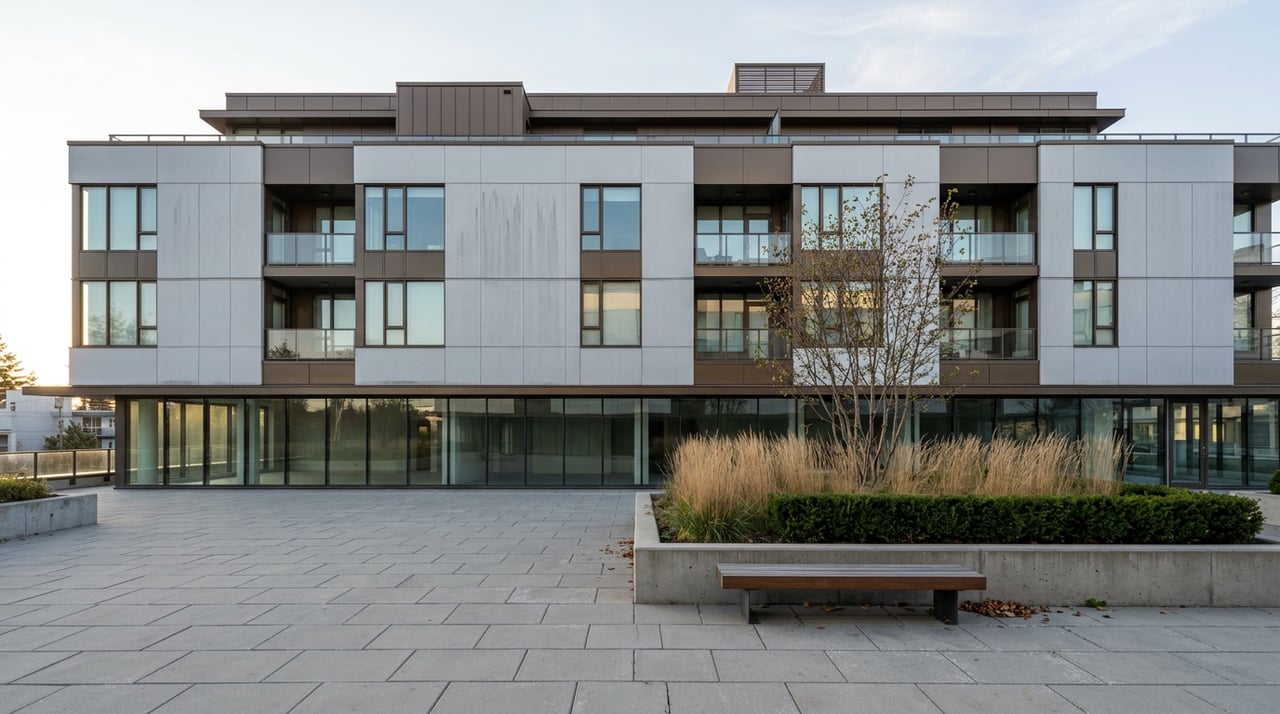
The demand is concentrated in North Potomac Yard, and it traces back to a specific building: Virginia Tech's Academic Building One, an 11-story, 300,000-square-foot structure at 3625 Potomac Ave that opened to students in January 2025. It sits on a 3.5-acre site within the first 19-acre phase of the Innovation Campus, adjacent to the Potomac Yard-VT Metro station, which opened in May 2023.
More than 500 graduate students currently take courses there, according to Virginia Tech's own campus materials, most of them in computer science and computer engineering master's programs. That number is set to grow. University planning documents put the target at roughly 750 master's students and 200 doctoral students enrolled annually by 2029, five years after the building opened.
That's not a satellite classroom. It's a campus built specifically to seed talent for the tech employers moving into National Landing next door, and it changes what "Alexandria real estate" means for the blocks around it. A grad student cohort growing toward a thousand people needs somewhere to live, and most of them are not buying detached houses with yards. They're the exact demographic that fills new-construction condos near a Metro stop.
Why New Supply Isn't Scaring Off Buyers
Normally, a 31% jump in condo inventory would soften prices. That's what's happening in some neighboring jurisdictions where the regional forecast shows condo prices flat to down. In Alexandria, the new supply is landing in a corridor with a built-in reason to absorb it.
New condo and townhome projects have been approved specifically in North Potomac Yard to meet this, including the Dylan at Potomac Yard and the Landbay L townhomes, both positioned within walking distance of the Innovation Campus and the Metro station. These aren't speculative units waiting for a market to show up. They're being built into a corridor where the market already exists in the form of an anchor institution with a five-year enrollment target.
The area around them is filling in accordingly. Potomac Yard now has sit-down dining like Founding Farmers and the Big Greek Café, the kind of everyday retail that shows up once a neighborhood has enough residents and daytime foot traffic to support it rather than once it has a development plan on paper. That's a signal worth more than a rendering: the demand is already there, not just projected.
What This Means If You're Comparing Alexandria to Somewhere Else
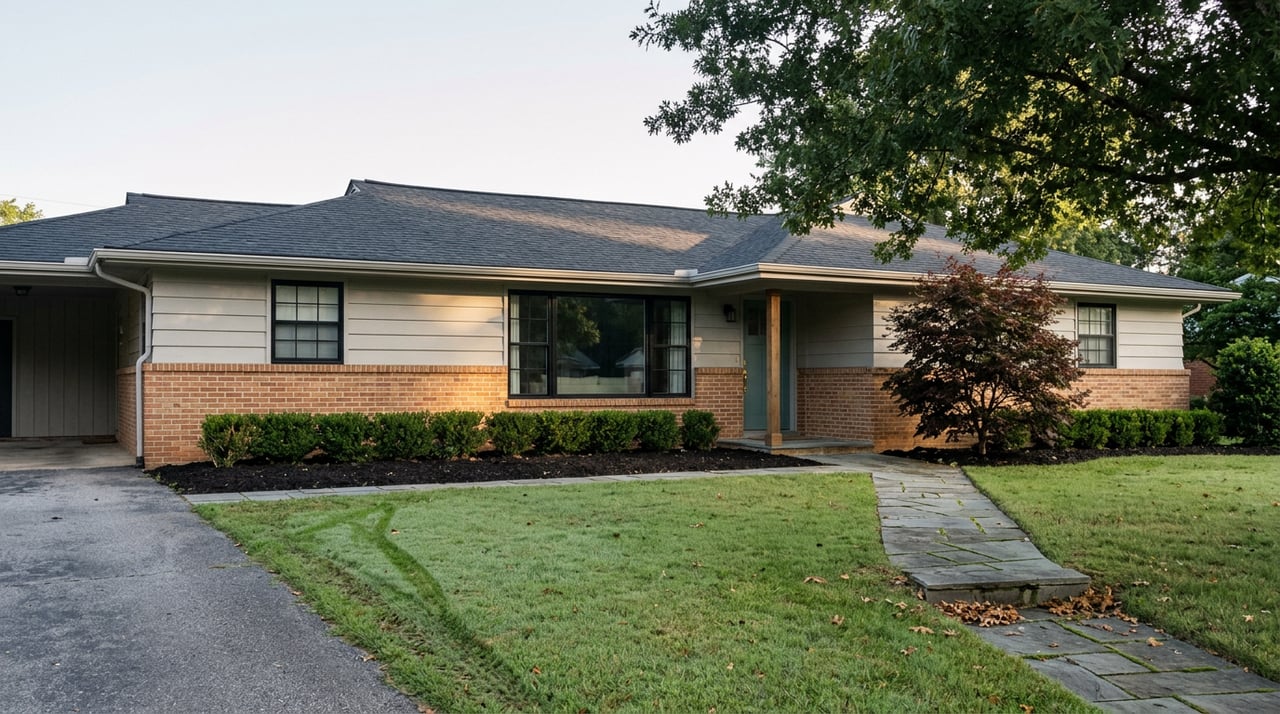
If your priority is a market where scarcity is doing the work, single-family homes in Alexandria's established neighborhoods fit that description right now. Inventory is contracting, not expanding, and prices are still edging up even with fewer homes changing hands. That's a different competitive environment than most of the region, where single-family inventory is generally forecast to grow.
If you're weighing a condo purchase and comparing Alexandria against a Northern Virginia jurisdiction where the forecast shows condo prices softening, understand that Alexandria's condo strength is not evenly distributed. It's concentrated in the corridor built around the Innovation Campus and the Potomac Yard Metro station. A condo in that specific footprint is competing in a market with a demand engine attached to it. A condo in another part of the city is just competing on its own merits against the same regional headwinds everyone else faces.
The practical takeaway is that "Alexandria" stopped being one submarket the day Academic Building One opened its doors. Treating the whole city as a single data point will tell you less than looking at which segment, and which few blocks, actually match what you're trying to do.
A Few Questions Worth Answering Directly
Is Potomac Yard part of Old Town? No. Potomac Yard sits in North Alexandria between Old Town North and Del Ray, a separate area from the historic King Street corridor, though all three are connected by the same Metro line and the Mount Vernon Trail.
Will the Virginia Tech enrollment growth actually continue? University planning targets call for the Innovation Campus to reach roughly 750 master's and 200 doctoral students annually by 2029. Enrollment plans can shift, but the current student population of 500-plus is already established, not projected.
Does more housing supply always push prices down? Not when the new supply is landing on top of a specific demand source. Alexandria's condo inventory is up sharply and prices are still rising because a real institution is generating real housing need in that exact corridor, which isn't true everywhere new units are being built.
If you're trying to figure out which version of Alexandria actually matches what you're looking for, whether that's the scarcity-driven single-family market or the newer, faster-moving condo corridor near Potomac Yard, that's the kind of comparison worth doing with someone who tracks these segments block by block. Christina Wood Real Estate works across Alexandria, Arlington, and DC every day, and a free consultation is the fastest way to see which part of this market fits your plans.